Bottle infeed and unscrambling
Moves empty bottles into the line at a controlled rate and presents them consistently to filling machinery.
Bottle machinery UK
Plan the bottle capper as part of the whole production line: filling, cap feeding, torque or seal control, labelling, coding, conveyors and packing flow.
Complete line thinking
Plan how the capper connects to filling, handling, labelling and packing when specifying the complete bottle line.
Moves empty bottles into the line at a controlled rate and presents them consistently to filling machinery.
Doses liquids, creams, gels or other products before the capping stage, with layouts chosen around viscosity and hygiene needs.
Feeds, lifts, sorts and presents closures so the capping head receives caps reliably.
Applies torque, forms aluminium closures, presses caps or handles pumps and trigger sprayers according to the closure.
Adds labels, batch codes and checks before packing, with conveyors and accumulation keeping the line balanced.
Line layouts
A good line layout considers operator loading, bottle infeed, clean access, cap replenishment, guarding, filling accuracy, capping consistency and downstream packing pace.
Semi-automatic filling and capping with bench or compact conveyor handling for lower output and varied bottles.
Filler, cap feeder, capper, labeller and coder linked by conveyor for continuous production.
Automated infeed, multi-head or high-speed capping, accumulation and inspection for repeat products and longer runs.
Machine options
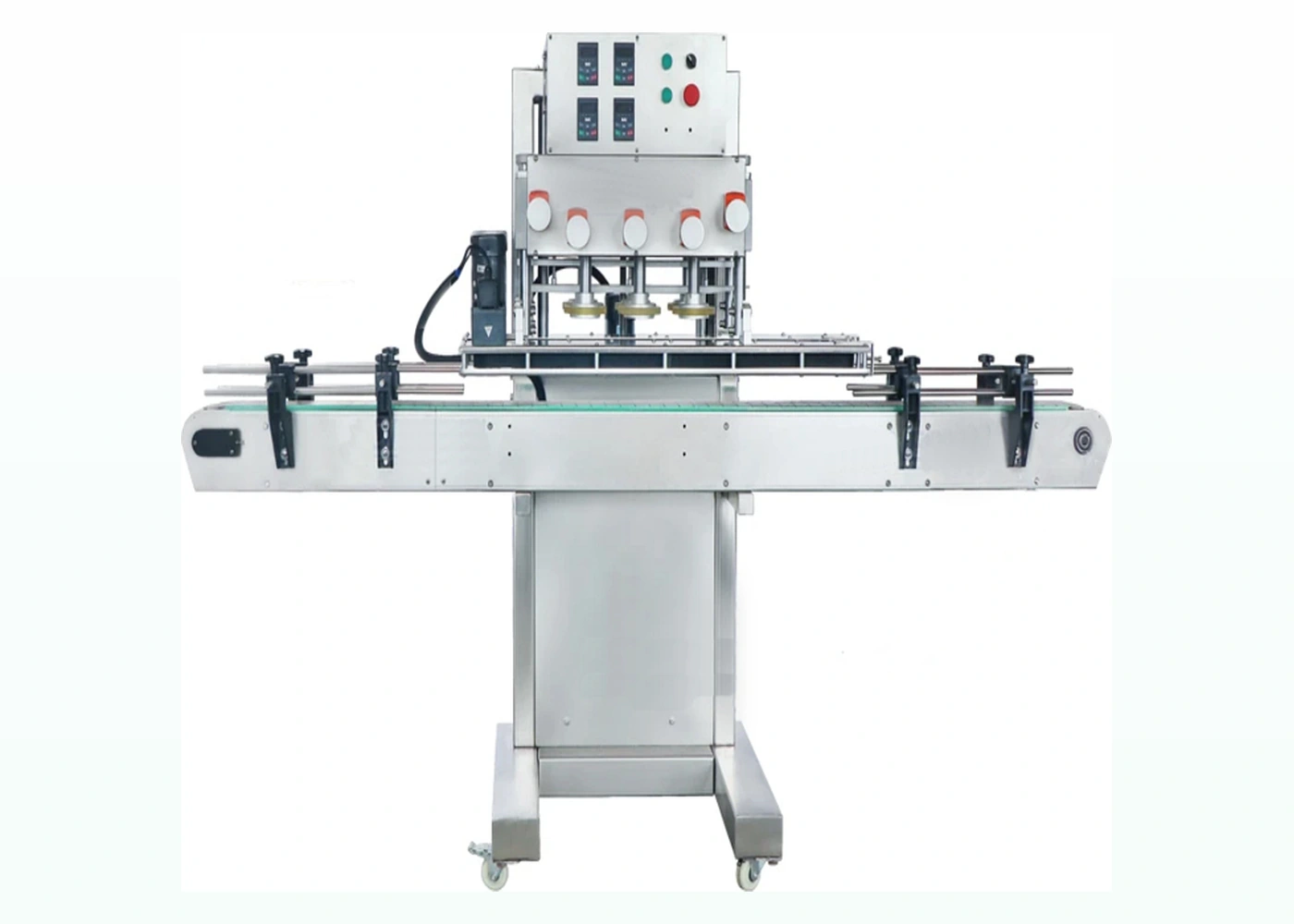
Screw cappers
Inline bottle capper for threaded closures where repeatable torque, bottle control and continuous output are important.
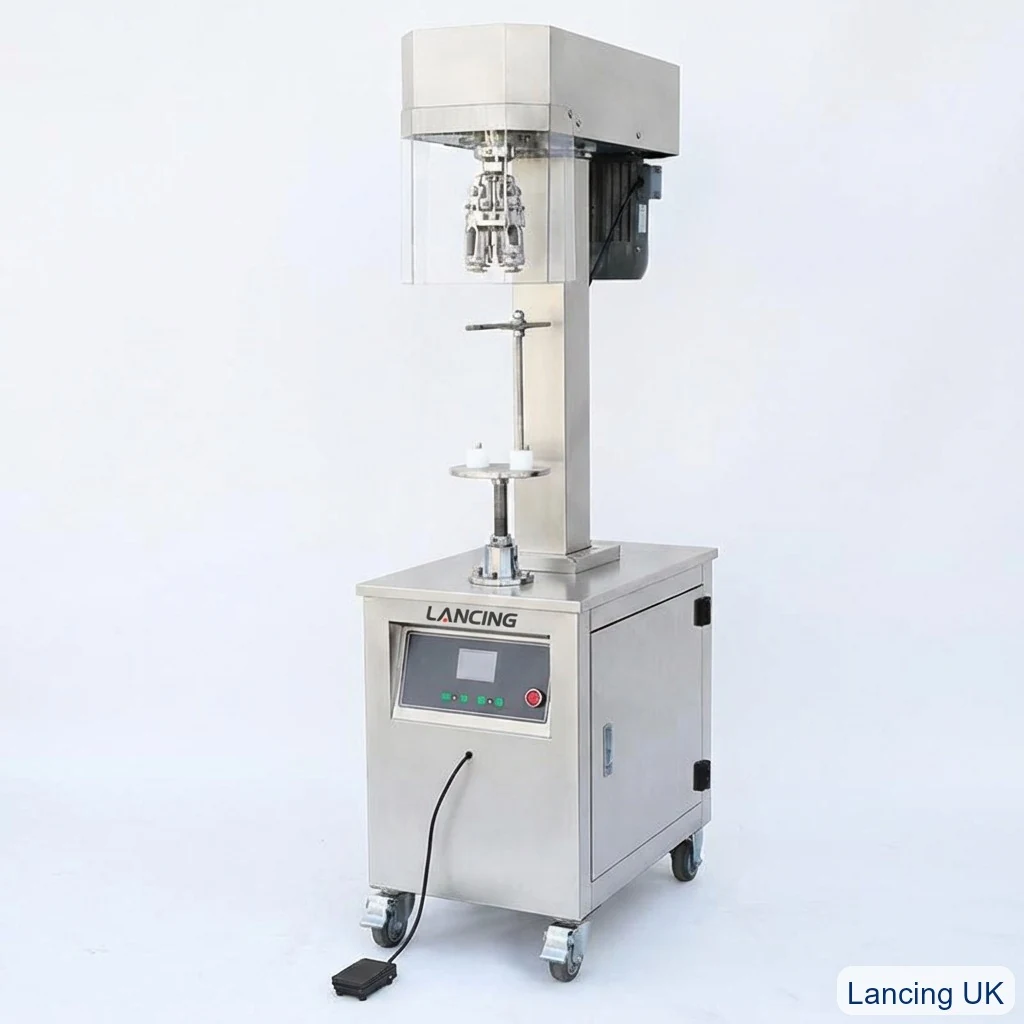
ROPP cappers
Operator-fed roll-on pilfer-proof capping for aluminium closures on glass bottles and short production batches.
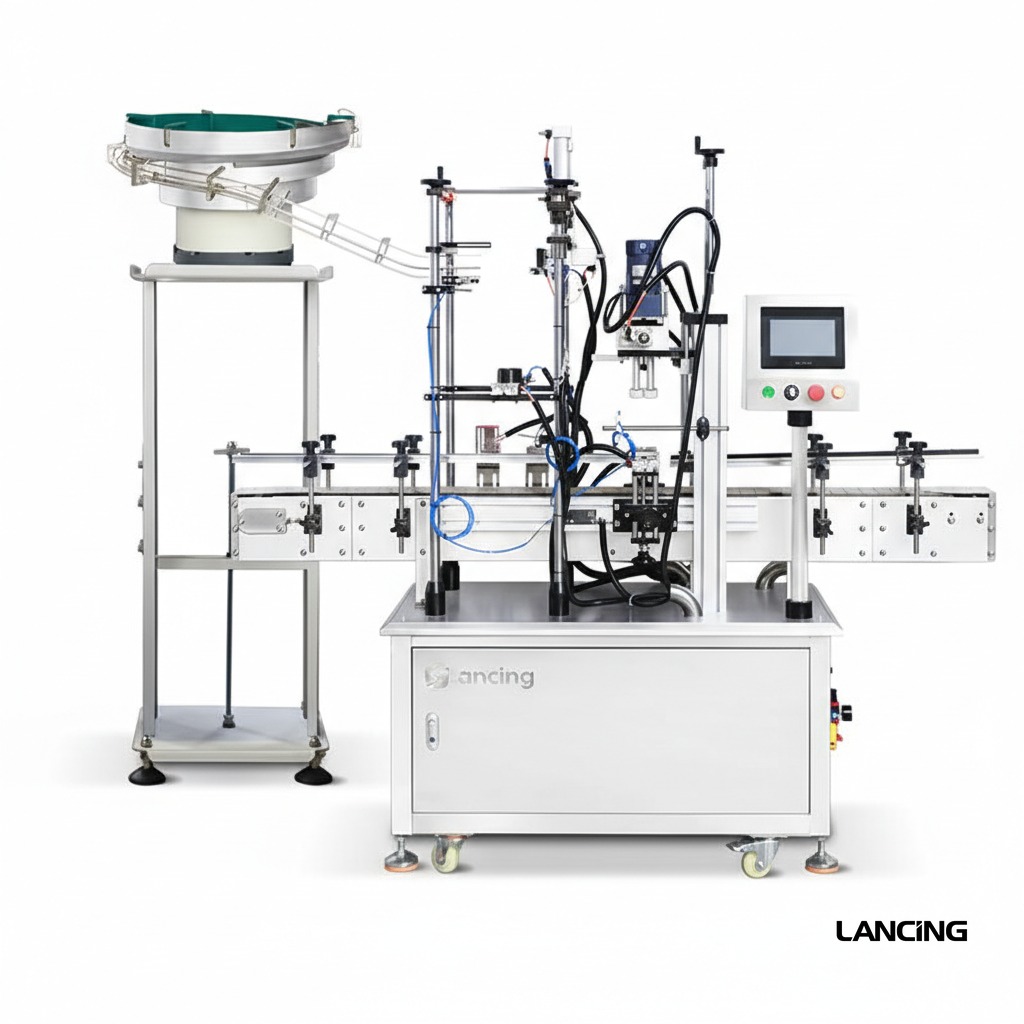
Pump cappers
Cap placement and tightening for pump closures where dip-tube handling, orientation and bottle stability matter.

Trigger cappers
Bottle capper for trigger sprayers and pump heads where cap geometry, tube control and threading need careful handling.

Bottle machinery
Integrated bottle machinery layouts covering filling, capping, cap handling, labelling, coding and conveyors.
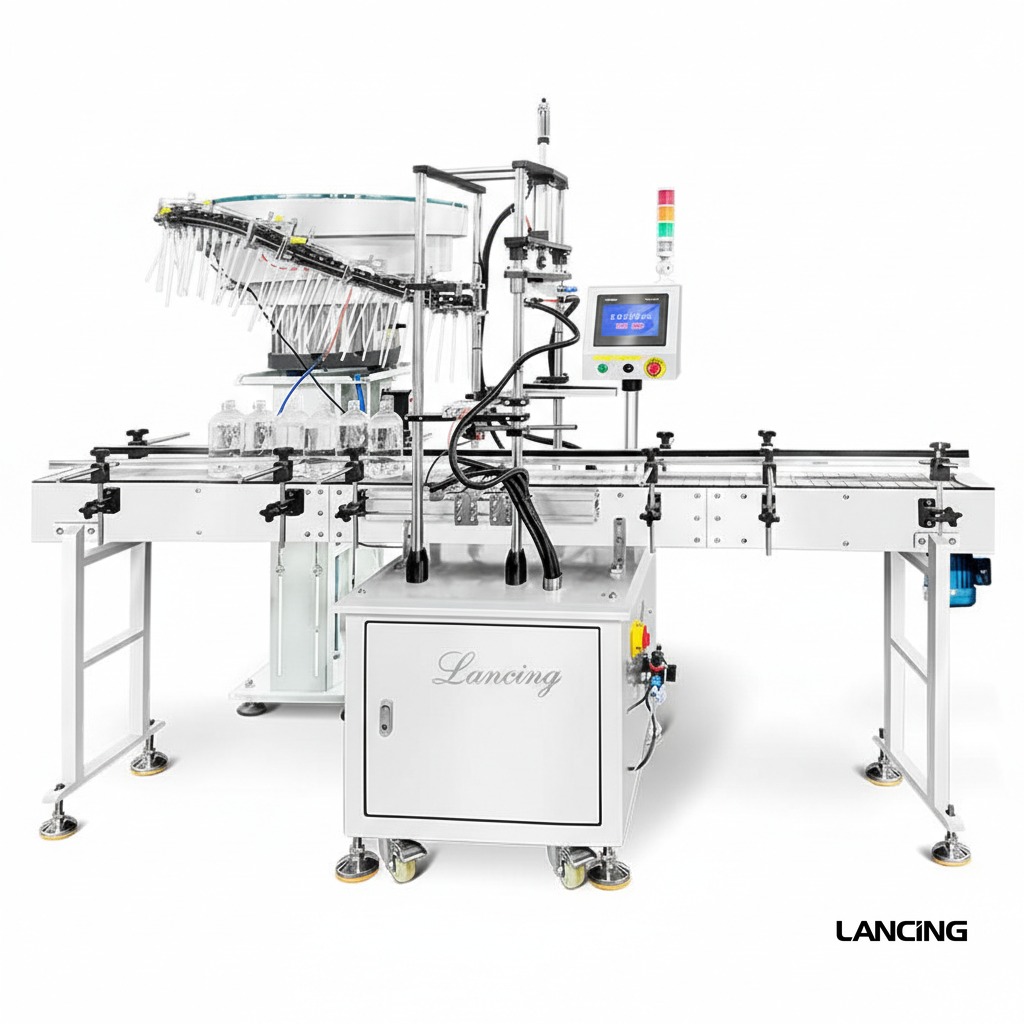
Cap feeding
Dedicated pump cap feeding and presentation equipment for closures that cannot be treated like simple screw caps.
FAQs
Bottle filling machinery, cap feeders, conveyors, labellers, coders, accumulation tables, inspection equipment and packing benches can all affect the capping line layout.
For many projects, yes. Fill product, container stability and line speed can influence the capping machine and conveyor layout.
Often it can, provided conveyor height, speed control, bottle spacing, accumulation and operator access are reviewed.
Send product details, floor-space limits, bottle and cap samples, target output and notes on existing machinery. Lancing can advise on a practical capping or line integration route.
Line engineering
A capper may perform correctly in isolation and still fail to deliver the required line output if bottle accumulation, conveyor transfer, cap supply or downstream stops are not planned. A useful bottle machinery scope therefore describes both each machine and the behaviour between machines.
| Interface | Questions to resolve | Acceptance evidence |
|---|---|---|
| Filler to capper | Can filled bottles remain stable? Is product present on the neck? What spacing, transfer and accumulation are required? | Representative filled bottles transfer without spill, collision or unstable presentation to the capping station. |
| Cap supply | How are closures loaded, sorted, oriented, buffered and replenished? What happens after a short stop? | The feeder recovers from normal refill and stop/start events without persistent jams or incorrect presentation. |
| Capper to inspection or labelling | How are missing, high, skewed or incorrectly tightened caps detected or contained? Does the bottle remain aligned? | Agreed sample defects are identified where inspection is included, and good bottles transfer consistently downstream. |
| Controls | Which machine starts, stops or faults the line? How are blocked and starved conditions communicated? | A documented cause-and-effect test demonstrates normal running, controlled stopping, restart and fault handling. |
| Changeover | Which settings and parts change for each bottle, cap, fill and label format? | Operators complete the agreed changeover and first-off checks using the supplied procedure and tools. |
Output evidence
Agree bottle, closure, fill condition, label and any worst-case formats before the test.
State the required good bottles per minute or hour and the representative run duration.
Include normal replenishment, blocked downstream, starved upstream and controlled restart.
Track rejects, spills, missing caps, torque or opening checks, labels and pack damage.
Record recipes, mechanical positions, change parts and first-off approval checks.
Use the filling and capping line page for the integrated process, cap feeder guidance for closure supply and the quotation checklist to prepare layout and output information.
Bottle line FAQ
The answer depends on the frequency and duration of normal micro-stops, the bottle stability and the line-control philosophy. Accumulation should be sized from observed or agreed operating conditions rather than added without a purpose.
Filled weight can improve stability, while product on the neck, foaming, splash or flexible sidewalls can make capping harder. The actual fill condition may therefore change guides, supports, timing and acceptance results.
The line should enter a controlled blocked condition, preserve product where possible and restart without creating bottle pressure, spills, cap faults or a surge beyond the next machine’s capacity.
They can, provided the mechanical transfer, conveyor height, speed range, electrical signals, safety responsibilities and documentation boundaries are agreed clearly before installation.
A machine test confirms an individual function. A line acceptance test demonstrates the agreed products, interfaces, controls, quality checks and sustained output across the combined equipment.
Provide bottle and cap samples, product and fill method, required output, line sequence, available footprint, utilities, existing equipment details, changeover list and the quality checks expected at handover.
Bottle machinery as one production system
Filling, capping, labelling, coding and inspection equipment interact through the bottle and the conveyor. A clear project scope identifies what each machine controls, where a bottle can wait safely, how a reject is handled and what qualifies as an accepted finished pack.
Use the bottle and closure compatibility guide to record formats, product condition and the finished-pack checks that matter.
Use the controls guide to allocate state signals, permissives, alarms, reject responsibility and restart behaviour.
Use the buffering guide to plan stable bottle queues, access and separation between processes.
Use the output-validation guide to measure conforming finished bottles with agreed normal events included.
Record the resulting scope in the quotation checklist and identify which conditions can be demonstrated during factory testing and which depend on the final site.