Bottle stability
Guides, side belts, nests or fixtures may be needed when the bottle has a narrow base or flexible walls.
Small containers
Small bottles often need more control than large bottles because they can be lightweight, unstable and sensitive to torque or side pressure.
Specification focus
A small bottle capper should keep the container stable while applying the right torque or seal pressure to the closure.
Guides, side belts, nests or fixtures may be needed when the bottle has a narrow base or flexible walls.
Small caps can overtighten easily, so torque range and cap head grip should be reviewed carefully.
Compact benchtop or semi-automatic cappers may be suitable where bottle sizes change frequently.
Related equipment
These pages help compare the main bottle capping machinery routes before requesting a detailed quotation.
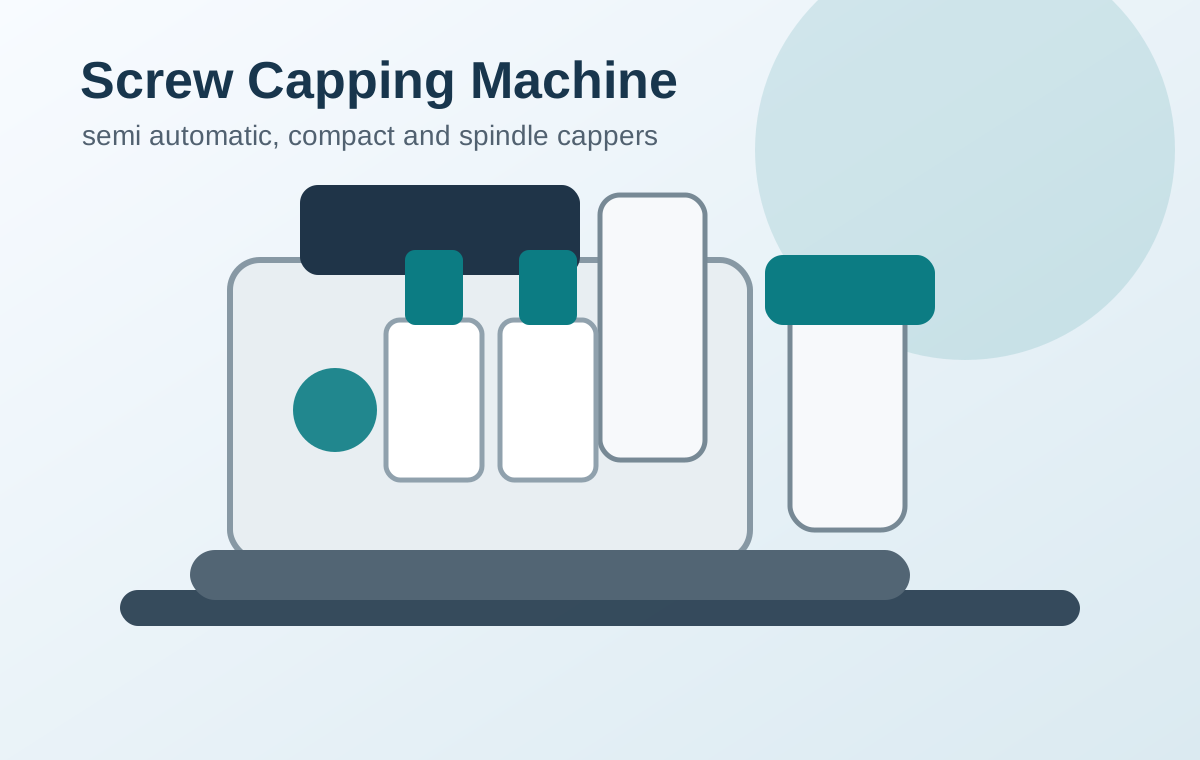
Related equipment
Bench and floor-standing capping machines for batch production, trials and lower-volume lines.
Related equipment
Capping machines specified around repeatable torque, cap profile and bottle stability.
Related equipment
Torque-controlled tightening for threaded caps, flip tops, spray closures and standard screw caps.
Project checklist
Accurate bottle, cap and line information reduces the risk of choosing a capper that looks suitable online but fails in production.
| Area | What to check |
|---|---|
| Bottle size | Height, diameter, neck finish and shape. |
| Closure | Tiny screw cap, dropper cap, flip top, pump, spray or tamper-evident cap. |
| Handling | Hand placement, fixture, conveyor, starwheel or guide rail. |
| Output | Trial batches, short runs or continuous production. |
Useful answers
These answers are designed to help production teams prepare a clearer enquiry before sample testing or quotation.
Yes, but bottle stability and accurate spacing become very important on an automatic line.
Often yes, depending on cap diameter, torque requirement and operator placement.
Send the smallest and largest bottles, all cap types and details of the fill product.
It may be possible with change parts, adjustable guides or fixtures, but this should be checked before quoting.
Send bottle photos, cap samples, output target and line details so the right capper, cap feeder or complete bottle machinery route can be reviewed.