Semi-automatic operation
Operators can place caps while the machine controls tightening or sealing.
Short runs and batches
Lower-volume production often needs simple setup, quick changeovers and reliable torque rather than a fully automatic inline line.
Specification focus
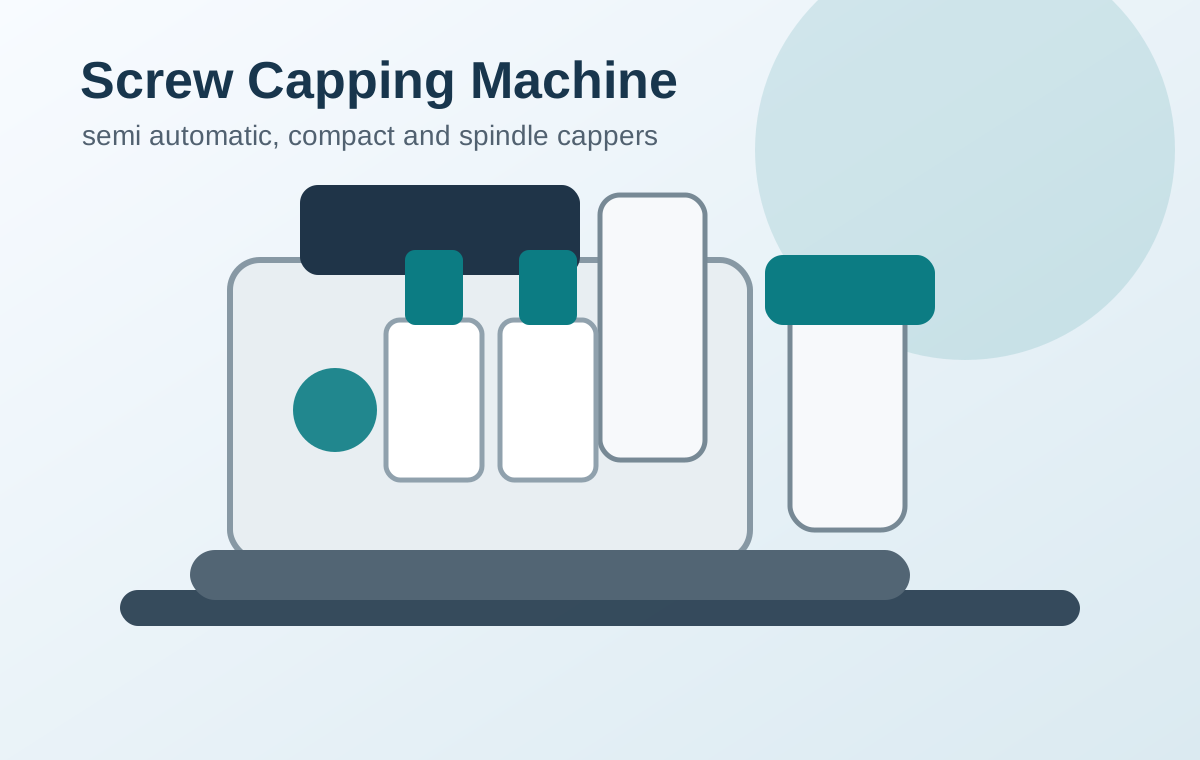
A low-volume bottle capper can reduce hand tightening, improve repeatability and support operators without over-automating the process.
Operators can place caps while the machine controls tightening or sealing.
Bench or compact floor-standing machines can suit laboratories, pilot rooms and small production areas.
Adjustable tooling and straightforward change parts can support multiple bottle and cap formats.
Related equipment
These pages help compare the main bottle capping machinery routes before requesting a detailed quotation.
Related equipment
Bench and floor-standing capping machines for batch production, trials and lower-volume lines.
Related equipment
Bench and floor-standing capping machines for batch production, trials and lower-volume lines.
Related equipment
Capping machines specified around repeatable torque, cap profile and bottle stability.
Project checklist
Accurate bottle, cap and line information reduces the risk of choosing a capper that looks suitable online but fails in production.
| Area | What to check |
|---|---|
| Batch size | Daily output, run length and changeover frequency. |
| Operator work | Cap placement, bottle handling and packing tasks around the capper. |
| Quality need | Torque consistency, cap seating and leak prevention. |
| Future growth | Whether a semi-automatic route could later feed into automation. |
Useful answers
These answers are designed to help production teams prepare a clearer enquiry before sample testing or quotation.
It can improve torque consistency, reduce strain and make batches easier to repeat.
Many semi-automatic or bench cappers are designed around one operator, depending on output target.
Manual cap placement may be enough at low volumes, but awkward caps may still need handling support.
Yes. It can be a useful way to test caps, bottles and torque settings before scaling up.
Send bottle photos, cap samples, output target and line details so the right capper, cap feeder or complete bottle machinery route can be reviewed.