Cap orientation
Some flip tops need orientation if the hinge or dispensing feature must face a specific direction.
Hinged closures
Flip top caps combine a threaded cap with a hinge and dispensing lid, so cap grip and orientation can be more difficult than a simple round screw cap.
Specification focus
The hinge, cap profile, skirt and closing surface should be assessed before choosing a screw capper or specialist handling route.
Some flip tops need orientation if the hinge or dispensing feature must face a specific direction.
The capping head must grip the cap without damaging the hinge or lid.
Many flip top applications use flexible plastic bottles that need careful side support.
Related equipment
These pages help compare the main bottle capping machinery routes before requesting a detailed quotation.
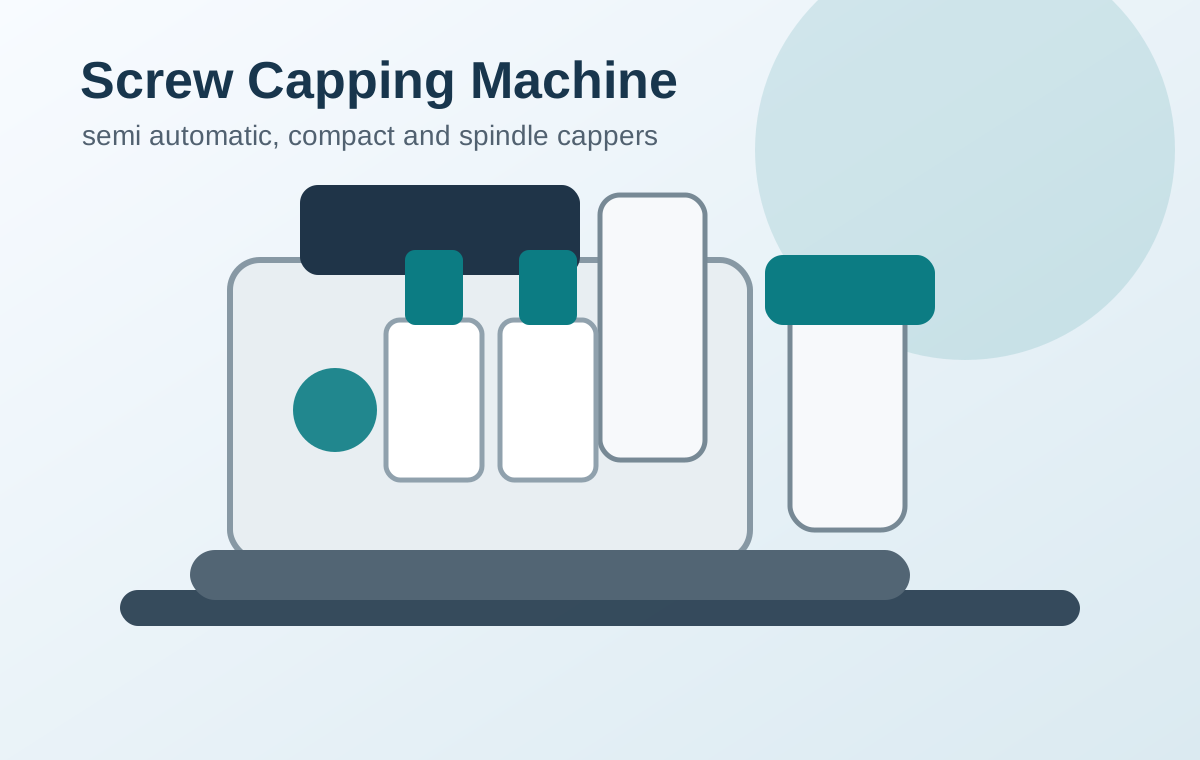
Related equipment
Torque-controlled tightening for threaded caps, flip tops, spray closures and standard screw caps.
Related equipment
Torque-controlled tightening for threaded caps, flip tops, spray closures and standard screw caps.
Related equipment
Bench and floor-standing capping machines for batch production, trials and lower-volume lines.
Project checklist
Accurate bottle, cap and line information reduces the risk of choosing a capper that looks suitable online but fails in production.
| Area | What to check |
|---|---|
| Hinge position | Whether cap orientation matters on the finished bottle. |
| Cap dimensions | Diameter, height, ribs, hinge and lid profile. |
| Bottle squeeze | How flexible the container is under side pressure. |
| Output | Manual placement, semi-automatic tightening or automatic line speed. |
Useful answers
These answers are designed to help production teams prepare a clearer enquiry before sample testing or quotation.
Sometimes, but hinge shape and cap grip need to be checked first.
Only if the finished product requires the hinge or dispensing point to face a particular direction.
Yes, they are common on sauces, condiments and some food or drink applications.
Send caps in production condition and filled or empty bottles showing the full size range.
Send bottle photos, cap samples, output target and line details so the right capper, cap feeder or complete bottle machinery route can be reviewed.