Filling to capping
The capper should accept bottles cleanly from the filler without unstable spacing or excess product contamination.
Complete bottle lines
A complete bottle line should be planned as a coordinated process, not a set of disconnected machines bought separately.
Specification focus
Each machine must match the same bottle range, output, conveyor flow and operator workflow to avoid bottlenecks.
The capper should accept bottles cleanly from the filler without unstable spacing or excess product contamination.
Capped bottles need to remain stable, dry and correctly spaced before labelling and coding.
Accumulation and packing areas should be sized so the line does not stop after the capper.
Related equipment
These pages help compare the main bottle capping machinery routes before requesting a detailed quotation.
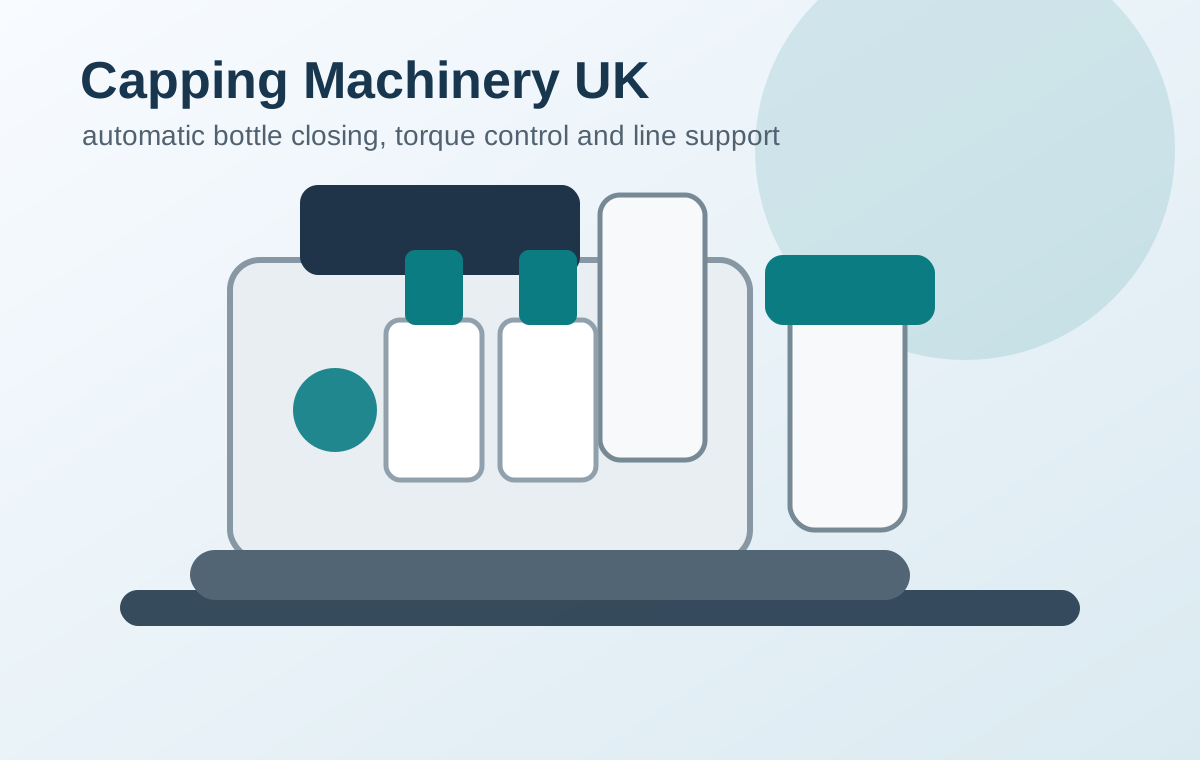
Related equipment
Integrated bottle machinery covering filling, cap feeding, capping, labelling and conveyors.
Related equipment
Inline bottle cappers with conveyor handling, cap presentation and repeatable closure control.
Related equipment
Filling, capping, labelling, coding, conveyors and line integration for bottle production.
Project checklist
Accurate bottle, cap and line information reduces the risk of choosing a capper that looks suitable online but fails in production.
| Area | What to check |
|---|---|
| Fill product | Viscosity, foaming, particulates and clean-down requirements. |
| Closure | Cap feeding, tightening, sealing and quality checks. |
| Label | Label position, bottle shape and speed. |
| Coding | Batch, date, lot code and inspection requirements. |
Useful answers
These answers are designed to help production teams prepare a clearer enquiry before sample testing or quotation.
A project can be planned as a complete line where the equipment and layout are reviewed together.
Filling normally comes before capping, but product handling and clean-down needs should be reviewed.
Automatic lines normally require conveyors and controls to link equipment together.
Yes, but future expansion should be considered during the first stage to avoid layout problems later.
Send bottle photos, cap samples, output target and line details so the right capper, cap feeder or complete bottle machinery route can be reviewed.