Simple installation
Electric machines may reduce the need for compressed air, depending on the capping method and model.
Electric capping
Electric bottle cappers can suit production areas where simple power connection, repeatable torque and compact operation are priorities.
Specification focus
The right drive system depends on torque range, cap type, output target and whether the capper needs to connect to other bottle machinery.
Electric machines may reduce the need for compressed air, depending on the capping method and model.
Controlled tightening helps reduce loose caps, over-tightening and inconsistent manual closing.
Electric cappers can be useful for laboratories, cosmetics, oils, healthcare and other lower-to-medium volume jobs.
Related equipment
These pages help compare the main bottle capping machinery routes before requesting a detailed quotation.
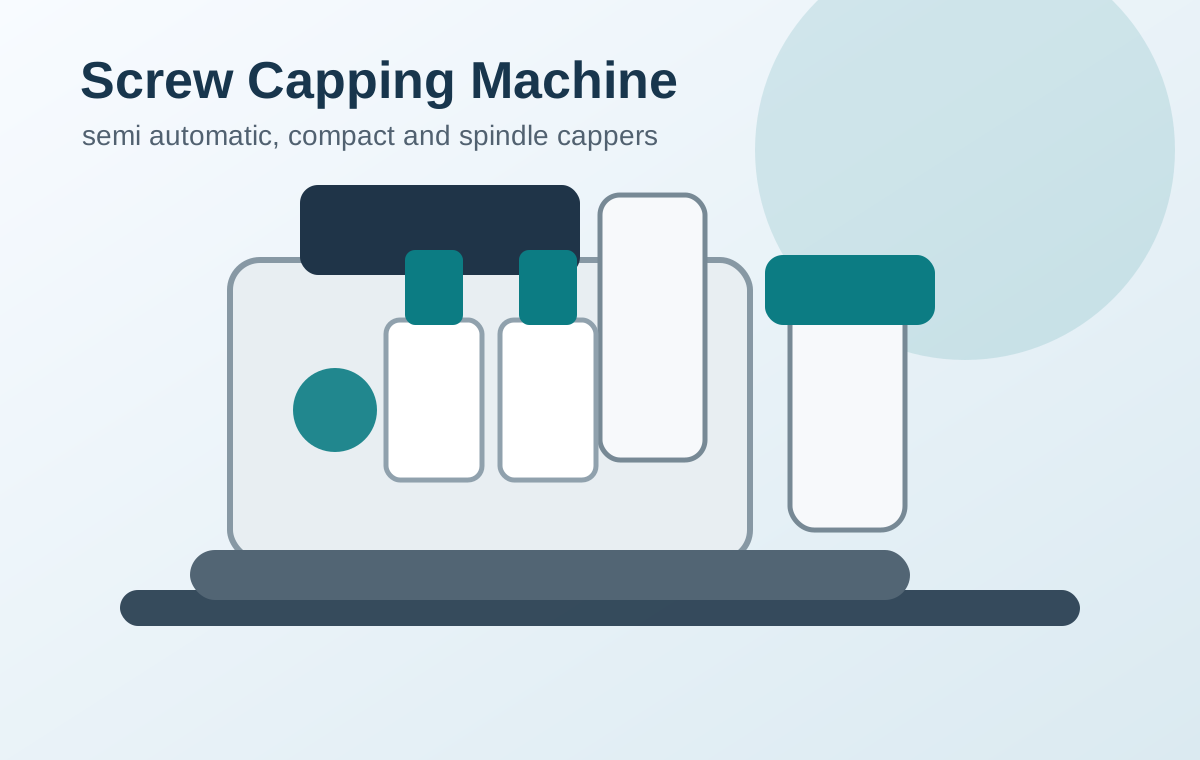
Related equipment
Torque-controlled tightening for threaded caps, flip tops, spray closures and standard screw caps.
Related equipment
Bench and floor-standing capping machines for batch production, trials and lower-volume lines.
Related equipment
Capping machines specified around repeatable torque, cap profile and bottle stability.
Project checklist
Accurate bottle, cap and line information reduces the risk of choosing a capper that looks suitable online but fails in production.
| Area | What to check |
|---|---|
| Power supply | Voltage, plug type and site electrical requirements. |
| Torque range | Closure torque target and acceptable tolerance. |
| Bottle support | Fixture, guide or belt needs for stable closing. |
| Cap type | Threaded screw cap, flip top, spray cap or specialist closure. |
Useful answers
These answers are designed to help production teams prepare a clearer enquiry before sample testing or quotation.
Yes, many electric cappers are used for threaded screw cap tightening, subject to torque range and cap grip.
Not always. Some systems may still use air for bottle holding, head movement or auxiliary operations.
Yes. Electric drives can be used on both semi-automatic and automatic capping systems.
Cap type, cap diameter, torque target, bottle details and output target are the key starting points.
Send bottle photos, cap samples, output target and line details so the right capper, cap feeder or complete bottle machinery route can be reviewed.