Best fit
Screw-cap lines where leakage, overtightening, loose caps or customer complaints need investigation.
Torque testing
Cap torque testing gives production teams a way to check whether caps are applied consistently and within an acceptable range. It can support machine setup, troubleshooting and quality investigations.
Search intent
This page is written for buyers comparing caps, bottle handling, cap feeding, torque or seal control and the wider machinery route before requesting a practical quotation.
Screw-cap lines where leakage, overtightening, loose caps or customer complaints need investigation.
Torque readings need consistent method and realistic sample handling. Test results should be interpreted alongside bottle and cap condition.
Provide the closure type, torque specification if available, sample quantities, current capper method and the quality issue being investigated.
Related equipment
Most capping projects have more than one possible machine route. These related pages help narrow the specification before samples are reviewed.
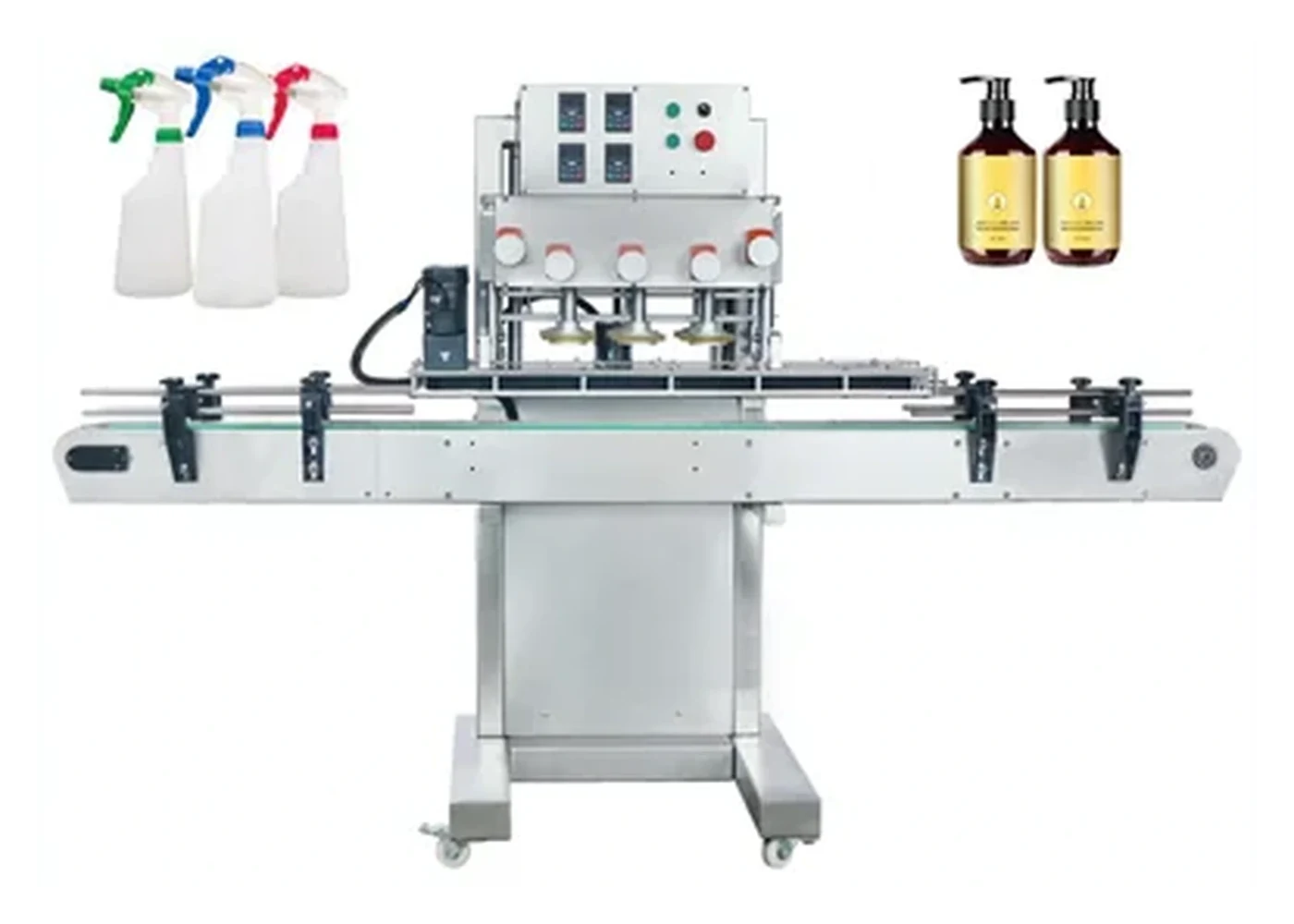
Related equipment
Support for capper reliability, change parts, setup checks, training and spares planning.
Catalogue photograph; the required configuration is confirmed during quotation.
View related page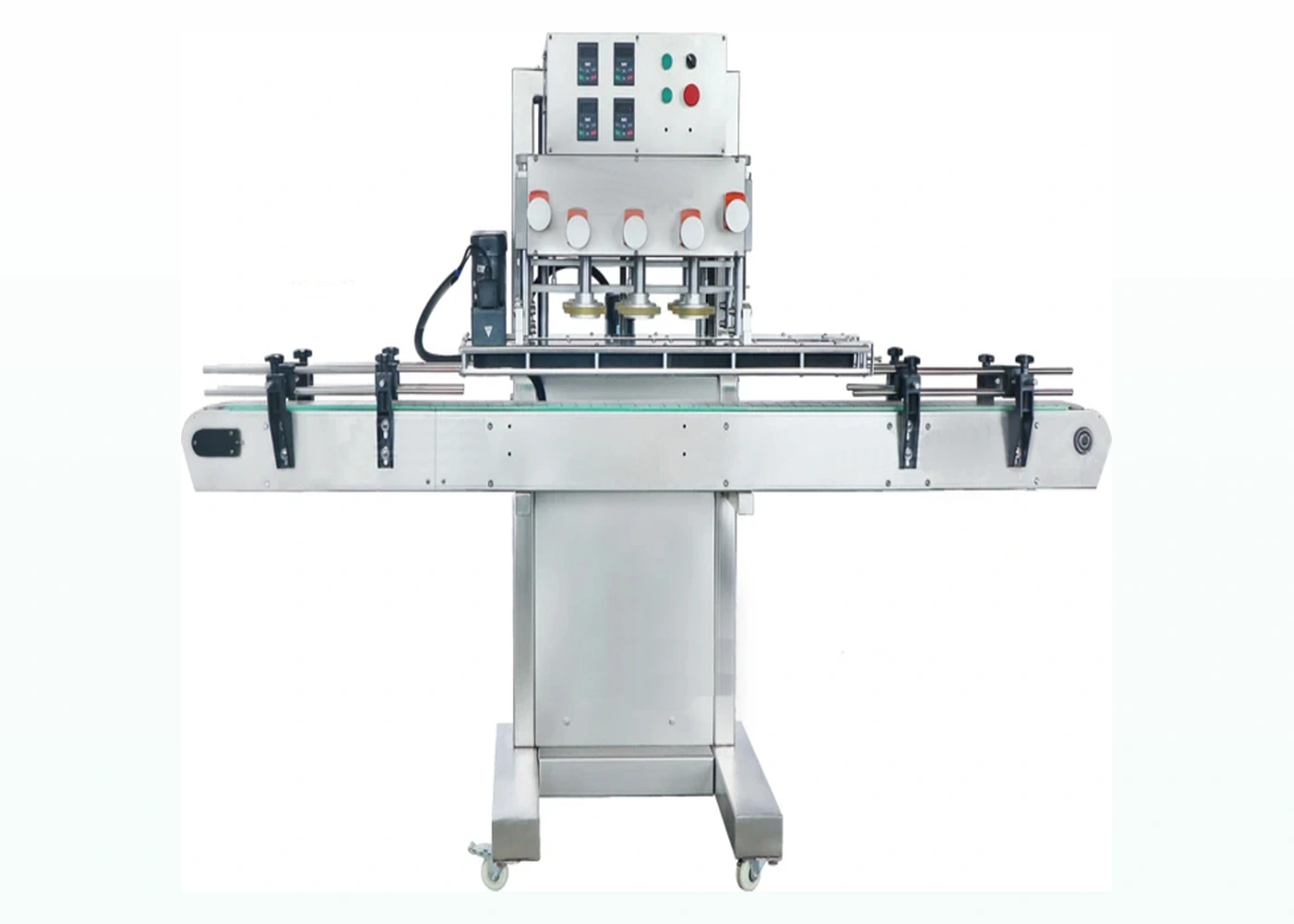
Related equipment
Guidance on torque, closure consistency and checks before a capping machine is specified.
Catalogue photograph; the required configuration is confirmed during quotation.
View related page
Related equipment
What to send when requesting a quotation for bottle cappers or complete bottle machinery.
Photograph of capping equipment on a bottle conveyor; the complete line scope is confirmed during quotation.
View related pageSpecification checklist
Clear information helps avoid the wrong capper, the wrong cap feeder or a line layout that cannot reach the intended output.
| Area | What to check |
|---|---|
| Bottle and cap samples | Confirm real production bottles, caps, neck finish, cap liner or band details and any variation between suppliers. |
| Output target | Confirm current and target bottles per minute, shift pattern, batch sizes and how often changeovers are expected. |
| Line integration | Check whether the capper is standalone or part of filling, conveying, labelling, coding and packing. |
| Operator method | Review cap placement, bottle loading, change parts, cleaning access, training and daily quality checks. |
Useful answers
These answers help production teams prepare a clearer enquiry before machine selection, sample testing or quotation.
Start with the closure and bottle. Check how the cap is applied, how the bottle is held, the target output and whether the line needs automatic or semi-automatic handling. Real samples are the best way to confirm suitability.
Provide the closure type, torque specification if available, sample quantities, current capper method and the quality issue being investigated.
Yes. The capping stage can be reviewed with filling, conveyors, labelling, coding, accumulation and operator access so the full line works as one production process.
Common causes include poor cap engagement, unstable bottles, unsuitable torque settings, caps that feed inconsistently, incorrect change parts, worn tooling or a mismatch between the capper and the closure style.
Send bottle photos, closure samples, target speed and line details so the right capping machine, cap feeder or complete bottle machinery route can be reviewed.
Capping decisions and practical evidence
A reliable torque result needs a defined test method as well as a suitable instrument. Before changing a capper, establish whether the variation comes from the machine, the package or the measurement process.
No. Zeroing establishes the starting indication; it does not prove the instrument's response across the working range. Follow the instrument manufacturer's verification and calibration arrangements. Record the instrument identity and calibration status so a change in measurement equipment does not look like a sudden change in the capping process.
The grip, bottle restraint, rotation method, top load and sample condition can differ. A comparison is meaningful only when the same approved procedure is followed. Define how the cap is held without deformation, how the bottle is prevented from turning and which point in the opening sequence is being reported.
Opening a closure can change the sample. Do not repeatedly open the same bottle and label the resulting readings as independent first-opening tests. Use the quality team's sampling arrangement to separate repeatability of the instrument from differences between production packs.
| Record | Why it matters |
|---|---|
| Instrument, range and units | Prevents comparison of different scales or unlabelled readings |
| Method and fixture | Connects the result to restraint, grip, rotation and top-load conditions |
| Bottle, cap and lot | Separates component changes from machine changes |
| Time and conditioning | Distinguishes an immediate reading from retention after storage or cooling |
| Head or station | Allows a machine-specific pattern to be investigated |
| Acceptance source | Identifies the approved pack limit rather than an arbitrary target |
No. A head check addresses the application equipment, while a finished-pack test includes the bottle, thread, closure and conditioning. Both can support diagnosis, but they answer different questions. A conforming head result alone does not prove sealing or consumer opening performance.
Mesa Labs describes capper-head verification separately from package testing. Its torque-testing portfolio also distinguishes quick verification from calibration. These references explain measurement principles; they are not a claim that Lancing provides accredited calibration.
Use a method appropriate to the closure and test objective. ASTM D2063/D2063M-24 covers manual measurement of removal-torque retention for matching continuous-thread packages under defined conditions over time. Its scope should not be extended automatically to another closure or used as a universal pass/fail limit.